Checked 22 September 2026
Sphere machines and bead mills
A sphere machine rounds one roughly shaped stone between cutting cups. A bead mill rounds several smaller stones in a chamber. The two machines make different things and need different finishing steps.
Choose the result first
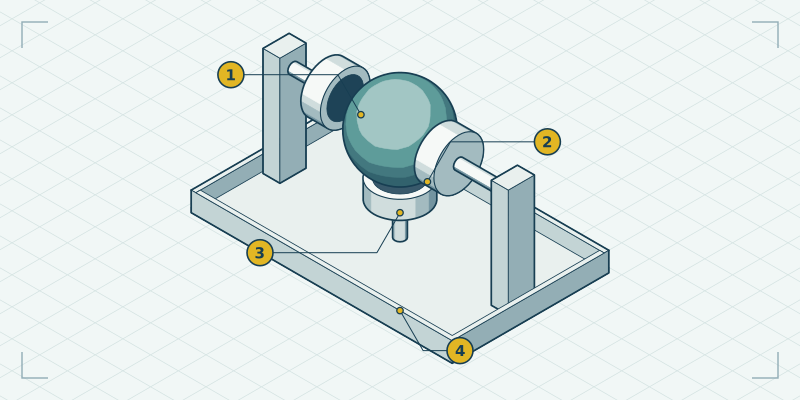
A sphere machine holds a single rough-round stone between two or three opposing cutter cups. The cups abrade the stone as it turns. Cup size and the machine's working range determine the sphere sizes it can handle. A bead mill uses a rotating chamber and grinding head to work a batch of smaller preforms. The bead mill does not drill bead holes.
Choose a sphere machine for single display spheres and a bead mill for batches of beads. Price a drill separately if the finished pieces need holes.
What the current Covington range covers
| Machine | Stated work | Check before ordering |
|---|---|---|
| Small sphere machine | ¼–1 in spheres | No longer listed; Covington still sells its cutter cups |
| Two-headed sphere machine | 1¼–9 in spheres | Cup pair, thread and freight |
| Three-headed sphere machine | 2½–10 in spheres | Three matching cups, thread and power supply |
| Bead mill | 5/16–¾ in preforms; up to twenty ½ in pieces per batch | Single or dual speed, chamber and grinding head |
The current product pages describe the two-headed and three-headed machines as freight items. Each is ordered with one cup size and either 1-8 or ¾-inch pipe thread. The three-headed shaft-adapter listing says those adapters do not fit the two-headed machine. Do not order a cup or adapter by diameter alone.
Covington's bead-mill page says the machine is best suited to hard materials and advises against stone softer than Mohs 5. The same page describes a slower dual-speed setting for softer material. Ask Covington before using a soft stone; the slower setting does not cancel the warning.
Preforming and finishing still take work
A sphere starts as a sound piece cut into a cube or rough round. Cut away corners before placing it between cups; the machine is designed to round a preform, not consume a whole irregular boulder. Covington's small-machine instructions show cup alignment, preforming and abrasive changes. Clean the cups, pan and stone between grit stages so coarse grit does not reach the finer stages.
A bead mill also needs preformed pieces. Covington's 2010/11 catalogue calls for cubes cut slightly oversize with the corners ground off, and says the milled beads must then be polished in a gem tumbler. The mill does not drill them either; the gem-drill guide covers holes.
Identify an older machine before buying cups
Older Covington machines carry model numbers. Covington's 2010/11 catalogue lists the 381 two-headed and 383 three-headed machines, the 382 small sphere machine and the 1039 single-speed and 1040 two-speed bead mills. It also sold adapters for the 383 and replacement shafts for the 381 to convert them from 1-8 thread to ¾-inch pipe thread, so check which thread an older head has. Photograph the motor plate, cutter cups or grinding head, shaft threads, pan, bearings and any speed control. Ask for a demonstration with the intended material and grit system before pricing missing parts.
For a sphere machine, match cup size, quantity and thread to the exact head. For a bead mill, check the chamber and grinding head together; Covington still lists a replacement chamber and head. Confirm compatibility with the maker using the machine's plate and photographs.