Checked 22 September 2026
Cabochon polishing, dopping and inspection
Polishing starts when the stone is smooth and free of scratches. A pad and polishing paste or powder bring up the shine; a small handle can help you hold the stone. Deep grinding marks need more sanding first.
Dry the stone and find the last scratches
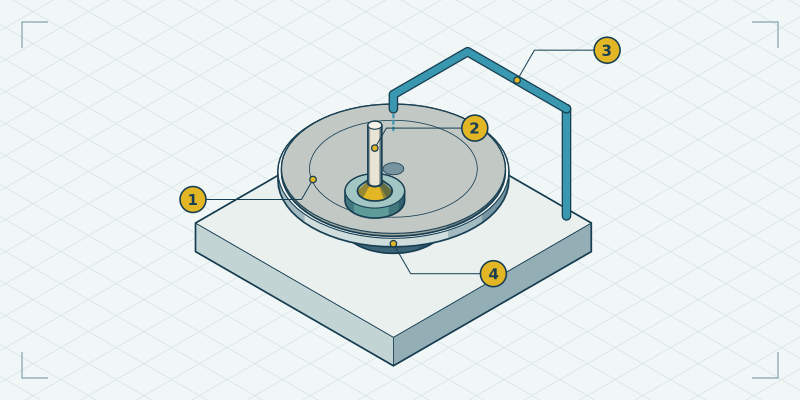
Water can hide scratches. Dry the cabochon under a good light after each abrasive stage and inspect it from several angles. A loupe can help locate a stubborn mark, but the important check is whether the previous wheel's scratches are gone across the whole dome. If one remains, return to the abrasive that can remove it and repeat the finer stages. More compound will not remove it. CabKing's illustrated sequence shows the dry inspection between wheels.
A movable lamp and a comfortable loupe or visor cover most cabbing inspection, and neither needs a particular brand. Choose a magnification you can hold steady while seeing the whole problem area; stronger lenses show a smaller patch of the stone.
Pair the compound with the pad and stone
CabKing lists tin oxide, cerium oxide, chromium oxide and diamond paste as common lapidary polishing agents and demonstrates diamond paste on a canvas pad. Diamond Pacific's diamond compound is sold in several mesh grades for pads, discs or buffs. The right compound depends on the stone and the pad, so follow the compound maker's instructions for that pairing.
Keep a separate pad for each compound or abrasive grade. Label it, wash the stone and your hands before changing grades, and keep polishing pads away from coarse grinding slurry. Crystalite's current brochure, printed page 9, warns about contamination. Follow the pad and compound instructions for wet use and heat-sensitive material.
Diamond abrasive comes as loose powder, spray and compound; Diamond Pacific lists all three. Each applies diamond to a compatible lap or pad in a different way, and a grit label alone does not tell you the carrier, amount or backing. Use the form specified for your lap, and do not mix grades on one polishing surface.
Dop only when a handle helps
A dop stick holds a small or delicate cabochon so your fingers stay clear of the abrasive. It is optional for a larger stone you can hold safely. CabKing's cabbing guide describes wax dopping and removal; its green dop wax softens at about 250°F (121°C). Use a controlled dop pot and follow the wax and stone instructions. Hot wax can burn skin, and heat-sensitive stone needs care.
Choose a stick with a contact area suited to the stone. Let the bond set before taking the stone to a wheel, and stop if the cab loosens. If you later work the back, attach the stick to the finished face with a method appropriate for that stone. CabKing's guide frees a waxed stone by chilling it in a freezer for 10 to 15 minutes. If you dop with glue instead, check that the adhesive and its solvent suit the stone; porous or treated gems can absorb them.
Start with what solves a visible problem
- For inspection: a movable lamp, clean cloth and loupe.
- For small cabs: dop sticks, a compatible wax and a controlled pot.
- For polishing: one suitable pad and compound, kept separate from grinding supplies.
- For repeatable outlines: a cabochon template and fine marker.
The first-cabochon guide shows when to use each item.